
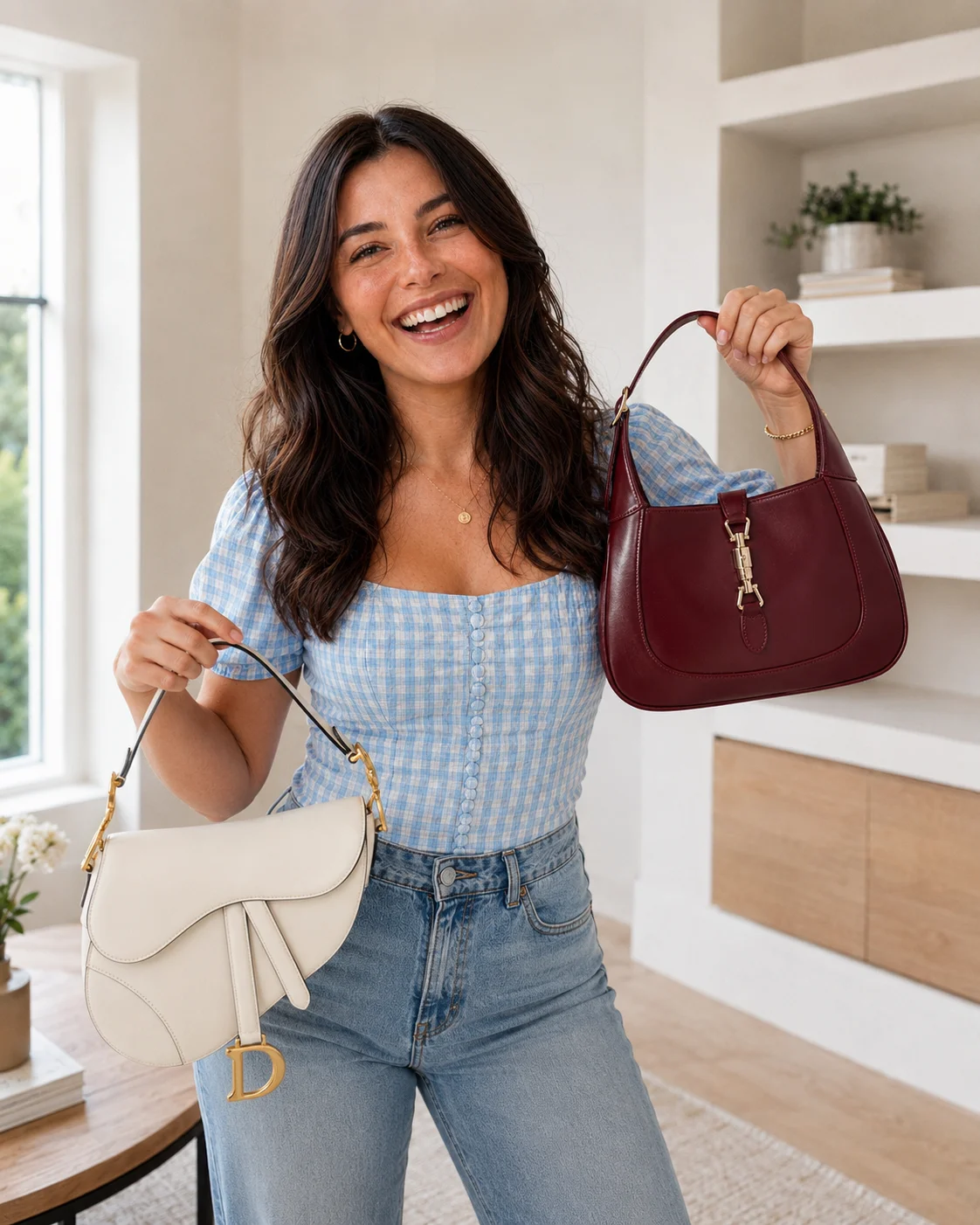
Hi, I’m Maurielle Lozario, the woman behind Mau Fashion.
There is a lot of noise in this world. Luxury marketing, reseller hype, vague quality claims, fake reviews, seller drama, factory names, “mirror quality” promises, and people confidently explaining bags they have clearly never held in their lives.
Mau Fashion was my place to slow all of that down.
I wrote about bags from the perspective of someone who actually shops, compares, asks questions, makes mistakes, learns from them, and cares about the small details: the shape of a handle, the tone of the hardware, the feel of the leather, the stitching, the glazing, the lining, the weight, the way a bag sits when it is carried in real life instead of staged perfectly under showroom lighting.
For a while, Mau Fashion became known for honest handbag talk, especially around replica reviews and practical shopping guides. Then life changed, as it tends to do with absolutely no regard for publishing schedules.
I became a mother. My priorities shifted. The site paused.
But I never stopped paying attention.
I kept watching the replica bag world change. I watched sellers come and go. I watched social media make everything faster and somehow more confusing. I saw more shoppers trying to figure out which replica websites were reliable, which quality claims actually meant something, and how to tell the difference between a bag with normal handmade variation and one that should never have passed quality control.
That is why I am bringing Mau Fashion back.
Not as a trend blog. Not as a place for empty “must-have” lists. Not as another website pretending every bag is perfect because someone somewhere wants a commission.
Mau Fashion is here to be a clear, experienced, and honest handbag editorial for women who want better information before they buy.
Why I Write About Replica Bags
I write about replica bags because women are already searching for them, buying them, comparing them, and DMing sellers at 1 a.m. trying to figure out whether “1:1” actually means anything. Pretending the market doesn’t exist doesn’t shrink it. It just leaves shoppers reading sales copy written by the people taking their money.
The reasons are usually practical. Someone loves the Chanel Classic Flap but not the roughly $10,400 it now costs after a decade of price hikes that outran the leather. Someone wants to live with a Speedy 25 silhouette before committing to the authentic one. Someone is just tired of being told a quilted lambskin bag is an “investment” when caviar holds up to rain and lambskin scratches if you look at it wrong.
None of that means every replica is good, or every seller is honest, or that a site shouting “AAA,” “mirror,” “top quality,” and “1:1” in the same sentence has earned any of those words. Those are tiers in theory and marketing noise in practice. “AAA” means whatever the seller wants it to mean that week.
That’s exactly why the subject needs clearer writing.
A useful replica review shouldn’t say “this looks amazing.” It should say what was compared against the authentic reference, which details were checked, what held up, what gave it away, and which buyer it makes sense for. “Looks amazing” in a cropped, warm-lit photo is not a finding. It’s a lighting setup.
Here’s the part most pages skip: on a real bag, the details talk to each other. On a Louis Vuitton, the monogram should center across the flap seam, the date code or post-2021 microchip should sit where the line expects it, the edge glazing should be even and crack-free, and the hardware should feel heavy because it’s brass, not plated zinc that goes grey in six months. A replica can nail the shape and still fail because the canvas was cut without aligning the pattern, or the zipper pull is stamped instead of engraved, or the lining is a scratchy microsuede instead of the Alcantara it’s pretending to be. One detail being right proves nothing. The relationships are the tell.
So those are the things I actually check: monogram and logo alignment at the seams, stitch density and the slight tonal contrast of the thread, hardware tone and weight, glazing on the edges, leather grain (Togo vs Clemence vs the cross-hatch of Saffiano), the strap drop, the heat-stamp font and depth, the interior lining, and the glue smell that no amount of “factory direct” branding can hide. The stuff you notice on day three, once the unboxing high wears off and you’re just carrying a bag.
That’s the difference between content that helps and content that decorates a checkout button.
On Mau Fashion, my goal is to make replica shopping legible: how to compare details against the real reference, how to spot a quality claim with nothing behind it, what questions actually get a straight answer out of a seller (ask for raw photos of the date code and edge glazing, not the stock catalog shots), and how to set expectations before the package ships from halfway around the world.
If you’re new to this, my broader replica bag guide is the place to start.
It covers the basics before you drown in seller names, factory codes, and quality tiers, the tiny details.
What Mau Fashion Is Here to Do
Mau Fashion exists to help women shop with more clarity. That is the whole point, and it is a lower bar than the industry sets for itself, which tells you how bad the industry is.
I am not interested in handbag content that treats every product like a miracle, every seller like a saint, and every “1:1 mirror grade AAA” claim like it arrived on stone tablets. Those words are not a quality standard. They are four ways of saying “trust me” from people who have never met you.
I want this site to be useful instead. That means honest reviews, real buying guides, seller notes, side-by-side comparisons, and explanations that make the details legible before your money leaves the country.
When I review a bag, I look at the things that decide whether you keep it or quietly hide it in a closet: whether the structure holds its shape or slumps without a pillow insert, whether the leather is the grain it claims to be or pleather with a printed texture, hardware tone and weight, stitch density and thread color, edge glazing, heat-stamp depth and font, monogram alignment at the seams, the lining material, the strap drop, and yes, the smell, because fresh glue does not lie even when the listing does. I care less about how it shoots in soft light and more about how it looks on day thirty.
When I write about a replica website, I explain how the seller actually operates: whether they send raw factory photos before you pay or only stock images, how they handle a “QC” check before shipping, what their reship policy is when customs seizes a parcel, which payment methods leave you with recourse and which leave you with nothing, and the warning signs worth taking seriously, like a brand-new site with reviews that all sound like the same person wrote them.
When I write a guide, I want it to answer the questions shoppers are quietly typing at midnight: Is this seller reliable, or just well-reviewed by accounts created last Tuesday? Does this quality claim mean anything? What do I compare first? What is normal batch variation, and what is an actual defect I should reject? How do I keep from getting rushed by a “last one in stock” countdown that resets when you reload the page?
Mau Fashion is not here to make the decision for you. It is here to hand you better information so you can make your own call with fewer surprises, and fewer regrets.
My Editorial Standards
I take handbag content seriously because bad information here does not cost a few dollars. It costs a few hundred, wired to a stranger overseas, with no chargeback waiting at the end of it.
So when I write about a bag, a seller, or a replica website, I keep three things separate: what I have actually handled and inspected, what I can compare directly against an authentic reference or clear photos, and what is opinion or buyer judgment. If I am guessing, I say I am guessing. The rest of the internet blurs those three on purpose, because “we tested it” sells better than “we found it on another blog”.
I do not praise a replica just because it photographs well. A staged shot under a ring light flatters everything, including the bags that fall apart in a month. I also do not trash a bag over one handmade quirk, because some variation is normal: thread tension shifts between batches, leather grain is never identical twice, and a slightly off stitch is not the same flaw as glazing that cracks or a zipper that catches. The useful answer almost always lives in the specifics, so that is where I spend my attention: materials, structure, stitching, hardware tone and weight, glazing, heat-stamp and logo placement, then the parts buyers forget to grade, like seller communication, packaging, and how long the parcel really took to clear customs.
Mau Fashion exists to make those specifics legible instead of leaving you to learn them at your own expense.
You can read more about how I review products, sellers, claims, and recommendations on my editorial standards page.
A Note From Me
Bringing Mau Fashion back feels personal, because it is.
This site started as a place to write honestly about handbags, shopping, and the details women notice but most fashion sites skim past: the way a flap sits when the bag is half full, whether the hardware keeps its color after a rainy week, the small giveaways that separate a careful copy from a cash grab. I stepped away for a while. I am coming back with more bags handled, more sellers dealt with, and a much shorter patience for marketing that treats shoppers like they cannot read.
I want this space to feel thoughtful, useful, and honest, in that order.
If you are here because you love handbags, want to understand what “replica quality” actually means past the AAA-and-mirror buzzwords, are trying to tell two sellers apart, or just want someone to explain the details without making you feel silly for asking, you are in the right place.
A good place to start is my guide to buying replica bags. If you are weighing where to order, I keep running notes on the sellers and sites worth knowing, and if you have a specific style in mind, I broke things down in my take on Gucci replicas.
Thank you for being here, whether you followed Mau Fashion years ago or stumbled in today.
I’m thrilled to be writing again!